
Dates: Mar 10, 17 & 24, 1-3 PM ET
Cost: $60 for the series (Zoom Meeting) or Buy 2 Tickets, get 3rd Free


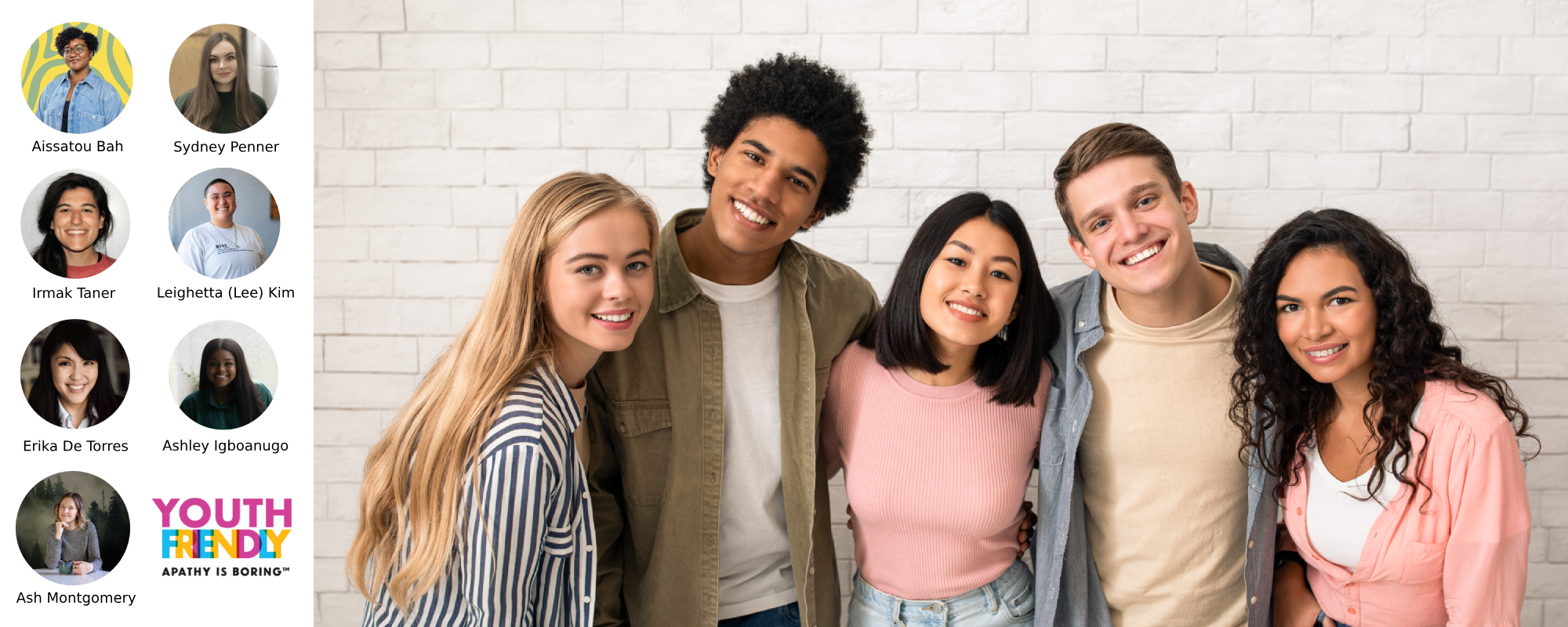
Presenters: Ashley Igboanugo and Ash Montgomery
March 10, 1-3 PM ET
In “From Outreach to Connection: Youth-Friendly Approaches to Engaging Young People,” we’ll move beyond one-way promotion to explore how ENGOs can build genuine, long-term relationships with the young people they seek to reach. This 2-hour workshop will use Apathy is Boring’s Youth Friendly framework and tools, and we’ll unpack what youth-friendly outreach looks and feels like. Through examples, reflection, and practical activities, participants will start mapping where their current outreach lands (or misses), and leave with concrete ideas, conversation starters, and next steps to turn traditional outreach strategies into meaningful, ongoing connections with young people in their communities.
Outcomes:
Deeper understanding of youth-friendly outreach: Participants can describe key characteristics of youth-friendly outreach versus traditional “broadcast” promotion and recognize where their current practices fall short.
Improved ability to build relationships (not just reach): Participants leave with increased confidence in using conversation-based and relational approaches that prioritize listening, trust-building, and ongoing connection with young people.
Clearer outreach strategy grounded in youth needs: Participants identify specific changes to their outreach plans (e.g., channels, messaging, partnerships, or touchpoints) better to reflect youth experiences, preferences, and feedback.
Outputs:
2-hour facilitated workshop session using Apathy is Boring’s Youth Friendly framework and tools, including presentation, activities, and group discussion.
Youth-friendly outreach mapping activity completed during the workshop, where participants map current outreach efforts, identify gaps, and note opportunities to strengthen relationships with young people.
Practical take-home worksheet or checklist featuring conversation starters, outreach ideas, and next-step prompts to help participants adapt their current outreach strategies into more relational, youth-friendly approaches after the session.
Presenters: Aissatou Bah and Lee Kim
March 17, 1-3 PM ET
In “Vibe Check Your Feed: Making Your Social Media Youth‑Friendly,” we’ll take a close look at how your organization shows up online and how that feels from a young person’s perspective. This 2-hour workshop uses Apathy is Boring’s Youth Friendly framework and resources to unpack what makes content feel authentic, inclusive and relevant for youth. Together, we’ll explore social media strategies, content creation, tools & resources and more. Through real examples and activities and hands-on practice, participants will leave with practical next steps to align their social media to better connect with the young people they hope to engage.
Outcomes:
Improved understanding of youth-friendly social content: Participants can identify key elements that make social media feel authentic, inclusive and relevant from a young person’s perspective.
Stronger ability to center youth voice online: Participants leave with greater confidence in using strategies that invite youth input, stories and leadership into their social channels, rather than only broadcasting organizational messages.
Clearer, more intentional social media strategy: Participants identify specific adjustments to their content (e.g., tone, formats, topics, frequency or engagement practices) to better connect with and retain young audiences.
Outputs:
2-hour facilitated workshop session using Apathy is Boring’s Youth Friendly framework and resources, including presentation, examples, reflection, and hands-on practice.
Social media “vibe check” activity completed during the workshop, where participants review sample posts (and/or their own feeds), assess how youth-friendly they are, and note strengths and gaps.
Practical social media guideline sheet and content planning template that participants begin filling in during the session, featuring draft post ideas, do’s and don’ts, and concrete next steps to bring youth-friendly principles into their ongoing social media practice.
Presenters: Irmak Taner and Erika De Torres
March 24, 1-3 PM ET
From “For Youth” to “By Youth”: Co‑Designing Projects That Land is a 2‑hour workshop that uses Apathy is Boring’s Youth Friendly framework and resources to help ENGOs meaningfully share power with young people. Together, we’ll explore how to move beyond consultation into true co‑design, where youth are actively shaping project ideas, decisions, and implementation. Through concrete tools, real‑world examples, and guided reflection, participants will identify where their current projects land (or fall flat) for youth, and practice strategies to embed youth voice, leadership, and lived experience at every stage of program design. Participants will also begin defining clear youth-centered outcomes and simple evaluation strategies like feedback loops, check-ins with youth partners, and success indicators co-created with young people, to track impact over time and continuously improve how they design with, not just for, youth.
Outcomes:
Stronger capacity for genuine co‑design: Participants can clearly distinguish between consultation and co‑design, and can describe concrete ways to share power with young people across a project lifecycle meaningfully.
Projects better aligned with youth realities: Participants identify specific changes they will make to embed youth voice, leadership, and lived experience into the design, delivery, and/or governance of at least one current or upcoming project.
Improved ability to define and track youth‑centred impact: Participants leave with increased confidence in co‑creating youth‑centred outcomes and simple evaluation strategies (e.g., feedback loops, check‑ins, and shared indicators) with young people.
Outputs:
2‑hour facilitated workshop session using Apathy is Boring’s Youth Friendly framework and resources, including presentation, real‑world examples, and guided reflection.
Project “landing map” and co‑design planning activity completed during the workshop, where participants assess how one of their current projects lands (or falls flat) for youth and outline next steps to shift it toward co‑design.
Youth‑centred outcomes and evaluation worksheet that participants begin filling out in-session, capturing draft youth‑defined outcomes, potential feedback loops, check‑in points with youth partners, and co‑created success indicators to use going forward.
Conducted by: Erika De Torres and Sydney Penner
If you’ve participated in the workshop series, you’re then eligible for “Leaf it to Us!” an organizational review to help you improve areas you’d like to improve and make more Youth Friendly.
“Leaf it to Us” is Apathy is Boring’s youth‑friendly organizational review series designed to help environmental non‑governmental organizations (ENGOs) understand how well they are engaging young people today—and where they can grow. Through a structured review grounded in AisB’s Youth-Friendly framework, the series examines a specific area that an ENGO is interested in improving (ex: outreach and communications, participation, decision‑making, and governance). Youth perspectives are centred throughout the process, offering organizations a transparent, honest snapshot of how their work feels and functions from a young person’s perspective.
Following the assessment, participating ENGOs receive concrete feedback, tailored recommendations, and access to practical tools and resources they can start using right away. This includes examples of youth‑friendly practices, reflection questions, and templates to help embed youth voice across programs, policies, and structures. By the end of the “Leaf it to Us” series, organizations leave with a roadmap of tangible next steps to move from “for youth” to truly “by youth” in their climate and environmental work.
Cost: $400 - Apathy is Boring’s organizational reviews usually cost around $10,000 but our partnership with the Sustainability Network allows us to provide this service at a heavily discounted rate.
Time Commitment: Around 10 hours
Broken down: 1 hour introductory call with Youth facing staff; 1-2 hours interview with Board of Directors; 1 hour of post-review call with Apathy is Boring Staff (complete with powerpoint presentation and recommendations). The rest of the hours are padding to ensure that there is enough (additional) time for emails, questions and document collection and review.
SPECIAL BONUS: Series registrants will also be invited to join quarterly Youth Friendly Alum Gatherings. These one hour online meetings will be an opportunity to test a community of practice: ask questions, engage in prompted conversations or just chat with AisB staff to talk about their learning journeys.

Sydney Penner is the Research and Evaluations Lead at Apathy is Boring. Following her degree in Psychology from Simon Fraser University, she has worked in both clinical mental health and addictions and non-profit social sciences research. She is passionate about Participatory Action Research (PAR) and interdisciplinary methods, and community-based knowledge translation and mobilization.

Erika De Torres is the Director of Impact at Apathy is Boring, where she leads the Research and Development Team and the Youth Friendly Initiative. She finished a Master’s in Political Science from McGill University, where she was interested in examining the impact of context on political preferences. She sat on the Advisory Council for Canada’s first Youth Climate Citizens’ Assembly in 2025, and currently serves as vice-chair of Simon Fraser University’s Alumni Council.

Ashley Igboanugo (she/her) is the Partnerships & Engagement Manager at Apathy is Boring. With a background in forensic psychology and public health, she brings a people-centred and equity-focused lens to her work. Ashley is passionate about youth civic engagement and building meaningful partnerships that support more inclusive and accessible participation.

Irmak Taner is the Projects Lead at Apathy is Boring. She has a background in Psychology, International Development Studies and Anthropology. She has worked as a researcher and facilitator following her education and aims to bring creative and reflective approaches to her work.

Ash Montgomery is the Director of Communications & Strategic Engagement at Apathy is Boring. Based in Montréal, she’s a Concordia University Cultural Studies alum who’s long been fascinated by the power of words and their impact. With over a decade of experience in storytelling, brand strategy, and community building, Ash leads the charge in shaping how AisB connects with youth across the country.

Aissatou Bah lives for the "share" button. As a Social Media & Content Manager at AisB, she specializes in turning "what if" ideas into digital conversation starters. A Humber PR alum based in Montreal, she has a knack for building communities that actually talk back. This year, she’s bringing her creative ideas & storytelling magic to Apathy is Boring to prove that civic engagement is anything but dull!
Leighetta (Lee) Kim is the Social Media Coordinator at Apathy is Boing. They are an interdisciplinary artist and communications professional with an intensive background in community organizing. Lee is passionate about breaking down inaccessible politics through the art of design and storytelling.
The DEFNP workshop series will offer tailored programming designed to match ENGOs on their decolonial (un)learning journeys. In Spring 2026 members of the ENGO sector will be able to choose one of three workshop tracks: Introduction to Decolonization in the ENGO Sector, Advanced Decolonial Theory and Application or For Indigenous Ears Only - A Space for Reflection and Action. Each series consists of four three-hour sessions.
Collectively, Decolonizing ENGO-First Nation Partnerships fosters:
Awareness of settler colonialism and the ways it potentially harnesses civil society;
Understanding about how Canadian law such as the Indian Act and the Income Tax Act has suppressed Indigenous governance systems;
Awareness that Indigenous peoples have unique inherent political and legal systems, with which ENGOs may want to form partnerships;
A better understanding about how to navigate partnerships with Indigenous communities that promote decolonial environmentalism;
A stronger sense about how to identify and explain individual and organization social locations (i.e. positionalities) as part of ethical partnership development;
Promoting the resurgence of Indigenous self-determination in the Canadian ENGO sector.
Cost: $100 (or register 4 staff from the same organization for one stream and get the 5th registration free)
70 participants max.
All registrants will be provided with a link to access the recordings and presentation slides for 60 days following each session.
Session 1: Settler Colonialism 101
Introduce ENGO representatives to the fact that colonization is a structure and not an event. Identifies key ways that colonialism moves through individuals and organizations.
Session 2: Positionality
ENGO representatives learn how to articulate their social location within a settler colonial state, and in relation to potential Indigenous partners.
Session 3: Inherent Indigenous Governance 101
Introduce the fact that Indigenous nations have their own sources of political authority that they can (and do) draw on when addressing environmental issues. Examples provided.
Session 4: Building Better Relations
ENGO representatives will road test ways they can implement previous workshop key points to re-imagine partnerships with Indigenous nations.

Cost: $100 (or register 4 staff from the same organization for one stream and get the 5th registration free)
All registrants will be provided with a link to access the recordings and presentation slides for 60 days following each session.
Session 1: Diagnosing Settler Colonialism in the Enviro Sector
Participants will be asked to share ways in which they have diagnosed and traced power in social justice movements and/or in the ENGO sector. This workshop will make space for discomfort as part of promoting decolonization.
Session 2: Inherent Indigenous Governance
A mix of advanced and introductory theory, this workshop delves into legal and political pluralism, naming the fact that Indigenous nations have their own sources of political authority that they can (and do) draw on when addressing environmental issues.
Session 3: The Nonprofit Industrial Complex
ENGO participants are introduced to theories and examples describing the Nonprofit Industrial Complex and the “Shadow State.” Purpose is to show how settler colonialism structures civil society.
Session 4: Decolonizing ENGO-First Nation Partnerships
This workshop delves deep into how ENGOs can partner with Indigenous nations beyond the Nonprofit Industrial Complex while promoting deference to inherent Indigenous political leaders.

Cost: Free
The Indigenous only space will be collaborative in nature but critical in approach. This track is a space for Indigenous folks within the ENGO sector to come together to discuss their experiences and work, with an eye to taking a position on what the sector might need to do in order to promote decolonization. Participants will use the first session to define our goals for the remaining three meetings. Therefore, session topics named here are proposals only.
Session 1: Naming the Cannibal: Settler Colonialism in the ENGO Sector
Session 2: Proposed topic: Reflections on working in the ENGO Sector
Session 3: Proposed topic: Centering Indigenous Thought in the ENGO Sector
Session 4: Proposed topic: Visioning a Decolonial Environmental Sector
.png)
© 2025 Sustainability Network


