
Cost: $75 for the series, or Buy 2 Tickets, Get the 3rd Free
Dates: May 7, 14, 21, 28, & June 4, 1-3 PM ET
*All registrants will be provided with a link to the recording and presentation slides following each session. The recording will be available for 60 days.
Please note, all participants will receive a confirmation email from TicketTailor with a link to join the meetings in Zoom Meeting with cameras enabled.

Is your organization ready to create change by engaging people who share your mission? Do you want to learn how to move your supporters from showing up to stepping up? Are you ready to explore how your volunteers can become leaders — and how to shift from measuring activity to measuring real power?
Engagement Organizing is a methodology that creates change. It moves beyond one-off actions and traditional volunteer management to build networks, develop leaders, and grow distributed power that can help you win your cause.
At its core, EO is about ownership. It equips the people who care about your mission to take meaningful leadership, deepen their commitment, and influence decision-makers in sustained, strategic ways.
By combining relational organizing, equity-centered leadership, and smart digital ecosystems, engagement organizing helps organizations:
• Transform supporters into long-term leaders
• Expand their reach through peer-to-peer networks
• Build shared ownership and distributed leadership
• Integrate digital tools without losing human connection
• Measure and grow durable power over time
EO 101 is a practical, forward-looking introduction to engagement organizing. You’ll leave with frameworks, tools, and a clear roadmap to strengthen people power within your organization.
Session #1: Why Engagement Organizing and Why Now
May 7, 1:00 to 3:00 PM ET
This session offers the big picture of EO and why organizing matters. We will highlight several success stories from the environmental movement and explore the importance of storytelling when transitioning to people power organizations.
Session #2: Designing for Power –Theory of Change & Engagement Pathways
May 14, 1:00 to 3:00 PM ET
Participants will connect their vision to a people-centered Theory of Change and explore power analysis. We’ll map engagement pathways that intentionally move people from awareness to action to leadership, using both engagement pyramids and your data.
Session #3: Growing your Network through Recruitment and Mobilization
May 21, 1:00 to 3:00 PM ET
In this session, we will focus on the peer-to-peer recruitment, supporter journey mapping, and building engagement ecosystems while mobilizing people who are interested in your mission.
Session #4: Shared Power - Distributed Leadership and Culture Shift
May 28, 1:00 to 3:00 PM ET
We’ll explore how to move from staff-driven models to distributed leadership structures that empower volunteers and community members. Topics include leadership pipelines, stewardship, reducing barriers to participation, and building an inclusive culture of ownership.
We’ll also address what it takes to lead a sustainable culture shift inside your organization.
Session #5: Measuring what Matters – Digital Strategy, Advocacy and Next Steps
June 4, 1:00 to 3:00 PM ET
In this final session, we’ll bring everything together. Participants will learn how to design integrated digital ecosystems, track supporter journeys, and build metrics and dashboards that measure leadership growth, network strength, and advocacy impact - not just clicks and attendance.
You’ll leave with a clearer roadmap for turning organized people into lasting influence.
At the end of each session, Renata will offer an additional hour for participants who would like to discuss their challenges, upcoming plans, and next steps.
SPECIAL BONUS Each participating organization will be offered a one hour online coaching session with Renata during the series or within 2 weeks of its conclusion. This is an opportunity to engage directly with the instructor on how your ENGO can better embrace and implement the topic explored in the series.

Our Presenter
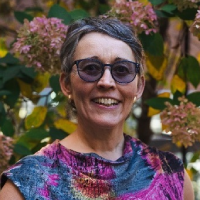
Renata Woodward is a seasoned land trust practitioner with extensive experience advancing environmental protection in Canada. Over the course of her career, she has served in executive leadership roles and as a consultant within the land trust community.
Renata brings deep practical experience in organizational development, leadership, and people-powered strategy. She is known for her collaborative leadership style, strong communication skills, and ability to support mission-driven teams in building effective, sustainable organizations.
She continues to contribute to strengthening environmental organizations through strategic guidance, mentorship, and engagement organizing practice.
The DEFNP workshop series will offer tailored programming designed to match ENGOs on their decolonial (un)learning journeys. In Spring 2026 members of the ENGO sector will be able to choose one of three workshop tracks: Introduction to Decolonization in the ENGO Sector, Advanced Decolonial Theory and Application or For Indigenous Ears Only - A Space for Reflection and Action. Each series consists of four three-hour sessions.
Collectively, Decolonizing ENGO-First Nation Partnerships fosters:
Awareness of settler colonialism and the ways it potentially harnesses civil society;
Understanding about how Canadian law such as the Indian Act and the Income Tax Act has suppressed Indigenous governance systems;
Awareness that Indigenous peoples have unique inherent political and legal systems, with which ENGOs may want to form partnerships;
A better understanding about how to navigate partnerships with Indigenous communities that promote decolonial environmentalism;
A stronger sense about how to identify and explain individual and organization social locations (i.e. positionalities) as part of ethical partnership development;
Promoting the resurgence of Indigenous self-determination in the Canadian ENGO sector.
Cost: $100 (Register 2 spots, get the 3rd free)
70 participants max.
All registrants will be provided with a link to access the recordings and presentation slides for 60 days following each session.
Session 1: Settler Colonialism 101
Introduce ENGO representatives to the fact that colonization is a structure and not an event. Identifies key ways that colonialism moves through individuals and organizations.
Session 2: Positionality
ENGO representatives learn how to articulate their social location within a settler colonial state, and in relation to potential Indigenous partners.
Session 3: Inherent Indigenous Governance 101
Introduce the fact that Indigenous nations have their own sources of political authority that they can (and do) draw on when addressing environmental issues. Examples provided.
Session 4: Building Better Relations
ENGO representatives will road test ways they can implement previous workshop key points to re-imagine partnerships with Indigenous nations.
Cost: $100 (Register 2 spots, get the 3rd free)
All registrants will be provided with a link to access the recordings and presentation slides for 60 days following each session.
Session 1: Diagnosing Settler Colonialism in the Enviro Sector
Participants will be asked to share ways in which they have diagnosed and traced power in social justice movements and/or in the ENGO sector. This workshop will make space for discomfort as part of promoting decolonization.
Session 2: Inherent Indigenous Governance
A mix of advanced and introductory theory, this workshop delves into legal and political pluralism, naming the fact that Indigenous nations have their own sources of political authority that they can (and do) draw on when addressing environmental issues.
Session 3: The Nonprofit Industrial Complex
ENGO participants are introduced to theories and examples describing the Nonprofit Industrial Complex and the “Shadow State.” Purpose is to show how settler colonialism structures civil society.
Session 4: Decolonizing ENGO-First Nation Partnerships
This workshop delves deep into how ENGOs can partner with Indigenous nations beyond the Nonprofit Industrial Complex while promoting deference to inherent Indigenous political leaders.

Cost: Free
The Indigenous only space will be collaborative in nature but critical in approach. This track is a space for Indigenous folks within the ENGO sector to come together to discuss their experiences and work, with an eye to taking a position on what the sector might need to do in order to promote decolonization. Participants will use the first session to define our goals for the remaining three meetings. Therefore, session topics named here are proposals only.
Session 1: Naming the Cannibal: Settler Colonialism in the ENGO Sector
Session 2: Proposed topic: Reflections on working in the ENGO Sector
Session 3: Proposed topic: Centering Indigenous Thought in the ENGO Sector
Session 4: Proposed topic: Visioning a Decolonial Environmental Sector
.png)
© 2025 Sustainability Network


