
Date: Wednesday, October 7 1-2 PM ET
Cost: Free (Zoom Webinar)

*Please note, all registrants will be provided with a link to the recording and presentation slides following the sessions. The recording will be available for 60 days.
When far-right and authoritarian movements threaten civil society, nonprofits cannot afford to be caught unprepared.
Across the U.K. and around the world, organizations are facing increasingly hostile political forces. What can you, your organization, and your allies do now to protect your mission, strengthen your networks, and prepare for what may come?
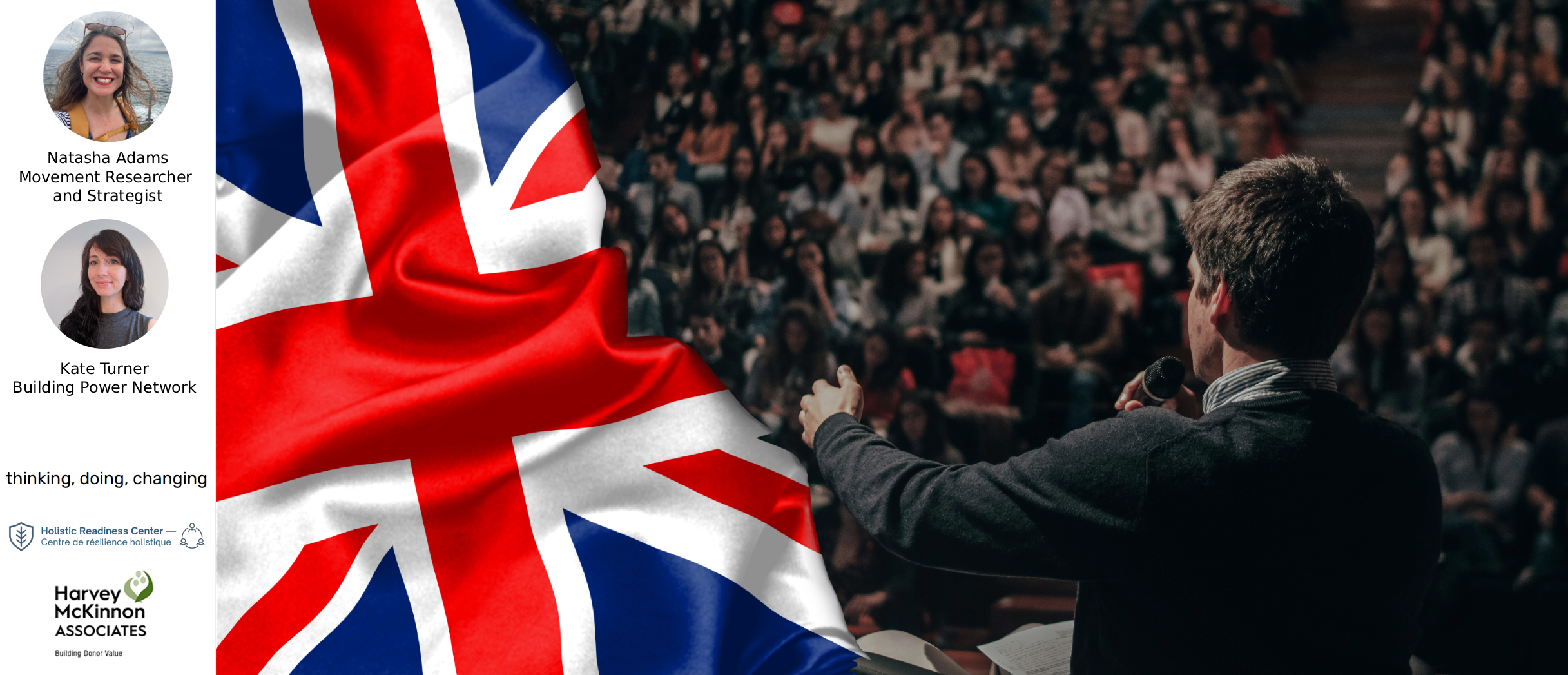
Join Natasha Adams, a leading U.K. movement researcher and strategist, for a timely conversation about how the U.K. reached this point—and what others can learn from its experience.
Natasha will explore why progressive nonprofits and funders were initially caught off guard by the rapid rise of far-right and authoritarian movements. More importantly, she’ll share what is being done now to respond.
She will highlight promising initiatives including The Together Alliance and A Million Acts of Hope. Plus show you her work building the relationships, organizing capacity, and large-scale networks needed to respond quickly and effectively.
Natasha will be joined by Kate Turner of the Building Power Network, who will bring a Canadian perspective to the discussion and explore what these lessons could mean for you and your organization.
This is a conversation about preparedness, resilience, organizing, and power. About what you and civil society can do now to become stronger before the next crisis arrives.

Our Presenter
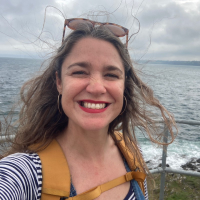
Natasha Adams is a movement researcher and strategist with 20+ years experience working for social change - as an activist, organiser, NGO campaign leader, trainer and consultant. She is currently working on a project to galvanise more strategic action and collaboration in the UK to meet the challenge of the moment and the threat of the authoritarian far right. Her research and thoughts about social change can be found at https://thinkingdoingchanging.com.
Moderator

Kate Turner is the principal coordinator of the Building Power Network, a cross-movement capacity-building network in Canada for organizations opposing the far-right and populist-right. Kate is based in Tiohtià:ke (Montréal) and has worked with non-profits, grassroots, academia, and civil society on campaigns and projects focused on Indigenous rights, human rights, climate justice, and sustainable development.
The DEFNP workshop series will offer tailored programming designed to match ENGOs on their decolonial (un)learning journeys. In Spring 2026 members of the ENGO sector will be able to choose one of three workshop tracks: Introduction to Decolonization in the ENGO Sector, Advanced Decolonial Theory and Application or For Indigenous Ears Only - A Space for Reflection and Action. Each series consists of four three-hour sessions.
Collectively, Decolonizing ENGO-First Nation Partnerships fosters:
Awareness of settler colonialism and the ways it potentially harnesses civil society;
Understanding about how Canadian law such as the Indian Act and the Income Tax Act has suppressed Indigenous governance systems;
Awareness that Indigenous peoples have unique inherent political and legal systems, with which ENGOs may want to form partnerships;
A better understanding about how to navigate partnerships with Indigenous communities that promote decolonial environmentalism;
A stronger sense about how to identify and explain individual and organization social locations (i.e. positionalities) as part of ethical partnership development;
Promoting the resurgence of Indigenous self-determination in the Canadian ENGO sector.
Cost: $100 (Register 2 spots, get the 3rd free)
70 participants max.
All registrants will be provided with a link to access the recordings and presentation slides for 60 days following each session.
Session 1: Settler Colonialism 101
Introduce ENGO representatives to the fact that colonization is a structure and not an event. Identifies key ways that colonialism moves through individuals and organizations.
Session 2: Positionality
ENGO representatives learn how to articulate their social location within a settler colonial state, and in relation to potential Indigenous partners.
Session 3: Inherent Indigenous Governance 101
Introduce the fact that Indigenous nations have their own sources of political authority that they can (and do) draw on when addressing environmental issues. Examples provided.
Session 4: Building Better Relations
ENGO representatives will road test ways they can implement previous workshop key points to re-imagine partnerships with Indigenous nations.
Cost: $100 (Register 2 spots, get the 3rd free)
All registrants will be provided with a link to access the recordings and presentation slides for 60 days following each session.
Session 1: Diagnosing Settler Colonialism in the Enviro Sector
Participants will be asked to share ways in which they have diagnosed and traced power in social justice movements and/or in the ENGO sector. This workshop will make space for discomfort as part of promoting decolonization.
Session 2: Inherent Indigenous Governance
A mix of advanced and introductory theory, this workshop delves into legal and political pluralism, naming the fact that Indigenous nations have their own sources of political authority that they can (and do) draw on when addressing environmental issues.
Session 3: The Nonprofit Industrial Complex
ENGO participants are introduced to theories and examples describing the Nonprofit Industrial Complex and the “Shadow State.” Purpose is to show how settler colonialism structures civil society.
Session 4: Decolonizing ENGO-First Nation Partnerships
This workshop delves deep into how ENGOs can partner with Indigenous nations beyond the Nonprofit Industrial Complex while promoting deference to inherent Indigenous political leaders.

Cost: Free
The Indigenous only space will be collaborative in nature but critical in approach. This track is a space for Indigenous folks within the ENGO sector to come together to discuss their experiences and work, with an eye to taking a position on what the sector might need to do in order to promote decolonization. Participants will use the first session to define our goals for the remaining three meetings. Therefore, session topics named here are proposals only.
Session 1: Naming the Cannibal: Settler Colonialism in the ENGO Sector
Session 2: Proposed topic: Reflections on working in the ENGO Sector
Session 3: Proposed topic: Centering Indigenous Thought in the ENGO Sector
Session 4: Proposed topic: Visioning a Decolonial Environmental Sector
.png)
© 2026 Sustainability Network


