

Date: June 24, 1-2 PM ET
Cost: Free (Zoom Webinar)

*All registrants will be provided with a link to the recording and presentation slides following each session. Recording will be available for 60 days.
The RAD Network is an Indigenous-led national network that emerged through cultivating the “social soil” through relationship building, ceremony, and the willingness to stay in "not knowing" long enough for something new to emerge. This session tells the story of how the RAD Network came into being, and what that story might offer to the broader ENGO community.
The RAD Network emerged from the seeds that were planted by the Indigenous Circle of Experts and the Conservation Through Reconciliation Partnership (CRP). RAD emerged to help bridge the needed funding gap to advance Canada's 30 by 30 commitment through the support of Indigenous-led conservation, such as Indigenous Protected and Conserved Areas (IPCAs) by advancing Indigenous-led natural climate solutions (NCS) and conservation economies across Canada.
Three presenters - spanning Indigenous leadership, Wise Practice facilitation, and the catalyzing research that helped weave it all together - will bring different voices to one shared story. Together they will address questions at the heart of the CSIF: How do you build trust with communities whose experience of institutions has been harmful? How do you professionalize without losing your grassroots roots? What does it look like to advance work in a good way inside a movement that is itself still becoming?
The Climate Solutions Innovation Forum is a multi-year program that highlights newer innovative environmental nonprofits who share the story to inspire emerging leaders and/or to expose seasoned leaders to new ways of affecting change and reaching new audiences. CSIF shines a light on less traditional policy-oriented NGOs, youth led organizations as well as recently emerged culturally-focused ENGOs.
We thank the Ivey Foundation for their funding support of this series.


Our Presenters
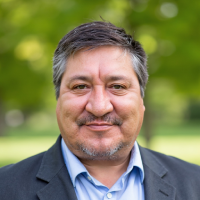
Steven Nitah is Managing Director at Nature for Justice and leads their First 30x30 Canada program. A member and former Tribal Chief of the Łutsël K'é Dene First Nation, Steven served as the Nation's lead negotiator in the creation of Thaidene Nëné — "The Land of the Ancestors." He was a core member of the Indigenous Circle of Experts, contributing to the landmark "We Rise Together" report, and a Leadership Circle member of the Conservation through Reconciliation Partnership. Steven is the original founder of the RAD Network and remains a strategic anchor on its Leadership Circle and a leading national voice for Indigenous-led conservation and climate economies.

Erin Dixon is the Wise Practice Director of the RAD Network, where she facilitates ethical space, relational governance, and knowledge-sharing across Indigenous Nations and partner organizations. She is the current steward of the RAD Vision Basket as it travels its snake dance across Turtle Island. Erin comes from Bineshii Okaningaming (Skeleton Lake) on Anishinaabeg Robinson-Huron and Williams Treaty lands, and shares through her Otipemisiwak Cree-Métis and Icelandic-Isles kinship. She is lead faculty in Indigenous Leadership at the Banff Centre, an Associate Professor at Royal Roads University, and co-founder of the Bineshii Okanin Centre for Sacred Places.

Mary-Kate Craig is a catalyst, researcher, and community organizer who supported the emergence of the RAD Network. Her doctoral research at the University of Guelph (PhD, Geography, Environment and Geomatics, 2026) documents the aspirations, barriers, and pathways needed to enable Indigenous-led natural climate solutions in Canada, and the emergence of RAD as an act of relational and decolonial praxis. She is a non-Indigenous woman seeking to work in right relations, she brings a holistic systems lens to field-building and transformation at the intersection of climate change, biodiversity, and reconciliation and has spent a decade helping create the conditions for something new to emerge.
The DEFNP workshop series will offer tailored programming designed to match ENGOs on their decolonial (un)learning journeys. In Spring 2026 members of the ENGO sector will be able to choose one of three workshop tracks: Introduction to Decolonization in the ENGO Sector, Advanced Decolonial Theory and Application or For Indigenous Ears Only - A Space for Reflection and Action. Each series consists of four three-hour sessions.
Collectively, Decolonizing ENGO-First Nation Partnerships fosters:
Awareness of settler colonialism and the ways it potentially harnesses civil society;
Understanding about how Canadian law such as the Indian Act and the Income Tax Act has suppressed Indigenous governance systems;
Awareness that Indigenous peoples have unique inherent political and legal systems, with which ENGOs may want to form partnerships;
A better understanding about how to navigate partnerships with Indigenous communities that promote decolonial environmentalism;
A stronger sense about how to identify and explain individual and organization social locations (i.e. positionalities) as part of ethical partnership development;
Promoting the resurgence of Indigenous self-determination in the Canadian ENGO sector.
Cost: $100 (Register 2 spots, get the 3rd free)
70 participants max.
All registrants will be provided with a link to access the recordings and presentation slides for 60 days following each session.
Session 1: Settler Colonialism 101
Introduce ENGO representatives to the fact that colonization is a structure and not an event. Identifies key ways that colonialism moves through individuals and organizations.
Session 2: Positionality
ENGO representatives learn how to articulate their social location within a settler colonial state, and in relation to potential Indigenous partners.
Session 3: Inherent Indigenous Governance 101
Introduce the fact that Indigenous nations have their own sources of political authority that they can (and do) draw on when addressing environmental issues. Examples provided.
Session 4: Building Better Relations
ENGO representatives will road test ways they can implement previous workshop key points to re-imagine partnerships with Indigenous nations.
Cost: $100 (Register 2 spots, get the 3rd free)
All registrants will be provided with a link to access the recordings and presentation slides for 60 days following each session.
Session 1: Diagnosing Settler Colonialism in the Enviro Sector
Participants will be asked to share ways in which they have diagnosed and traced power in social justice movements and/or in the ENGO sector. This workshop will make space for discomfort as part of promoting decolonization.
Session 2: Inherent Indigenous Governance
A mix of advanced and introductory theory, this workshop delves into legal and political pluralism, naming the fact that Indigenous nations have their own sources of political authority that they can (and do) draw on when addressing environmental issues.
Session 3: The Nonprofit Industrial Complex
ENGO participants are introduced to theories and examples describing the Nonprofit Industrial Complex and the “Shadow State.” Purpose is to show how settler colonialism structures civil society.
Session 4: Decolonizing ENGO-First Nation Partnerships
This workshop delves deep into how ENGOs can partner with Indigenous nations beyond the Nonprofit Industrial Complex while promoting deference to inherent Indigenous political leaders.

Cost: Free
The Indigenous only space will be collaborative in nature but critical in approach. This track is a space for Indigenous folks within the ENGO sector to come together to discuss their experiences and work, with an eye to taking a position on what the sector might need to do in order to promote decolonization. Participants will use the first session to define our goals for the remaining three meetings. Therefore, session topics named here are proposals only.
Session 1: Naming the Cannibal: Settler Colonialism in the ENGO Sector
Session 2: Proposed topic: Reflections on working in the ENGO Sector
Session 3: Proposed topic: Centering Indigenous Thought in the ENGO Sector
Session 4: Proposed topic: Visioning a Decolonial Environmental Sector
.png)
© 2025 Sustainability Network


